Machine intelligence has begun to shape decisions in war, medicine, law and education faster than the frameworks used to judge those decisions have adapted.
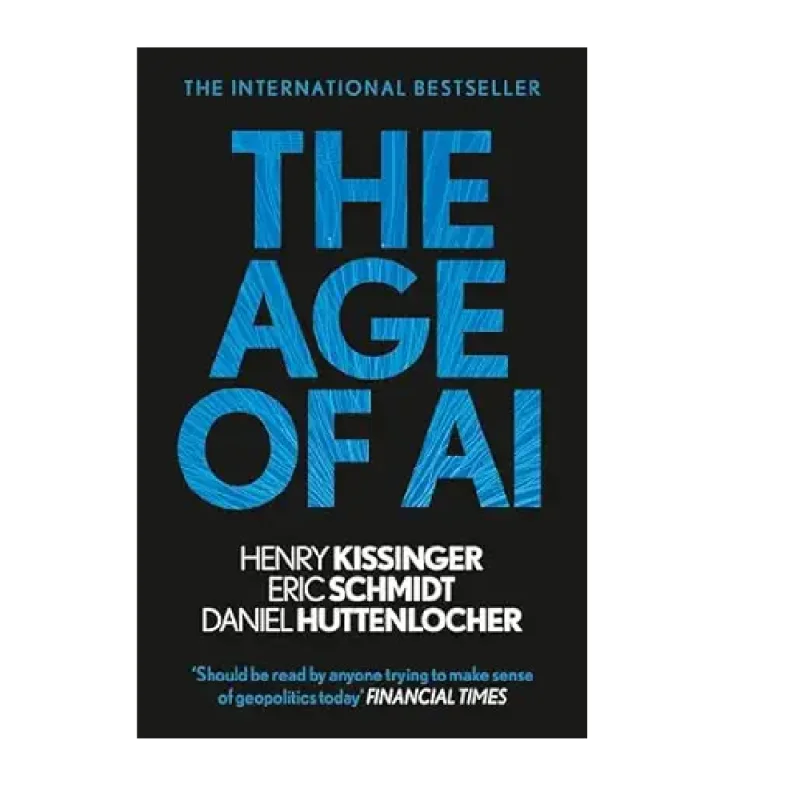
Henry Kissinger, Eric Schmidt and Daniel Huttenlocher examine that gap, arguing that artificial intelligence alters the human relationship with knowledge as decisively as the Enlightenment once did. Their case moves between concrete examples, such as systems that arrive at strategies no human expert would choose, and broader questions about political order, security and what people will trust a machine to decide.
What makes it worth shelf space:
• Three authors from diplomacy, technology and computer science writing as one argument
• Treats AI as a philosophical and political problem, not only a technical one
• Ranges across warfare, health care, education and everyday software
• Written for general readers, with no programming background assumed
Useful for policy readers, students of technology and anyone tracking how automated reasoning reshapes society, available through Boipoka.
 নতুন-1% ছাড়


![Magnus Chase and the Ship of the Dead [Paperback]](https://cdn.boipokabd.com/cdn-cgi/image/format=auto,width=3840,quality=85,onerror=redirect/cover/9eedf53d-97ff-4c52-a371-dc820749e21a/bk-en-179110.webp)


![The Hawthorne Legacy [Paperback]](https://cdn.boipokabd.com/cdn-cgi/image/format=auto,width=3840,quality=85,onerror=redirect/cover/18c61e8c-a5d6-44ab-98fb-0adc25538d4a/bk-en-179112.webp)


![Encyclopedia of Space and the Universe [Hardback]](https://cdn.boipokabd.com/cdn-cgi/image/format=auto,width=3840,quality=85,onerror=redirect/cover/e9486921-b31e-4e13-a6b9-56e7578edbee/bk-en-179101.webp)