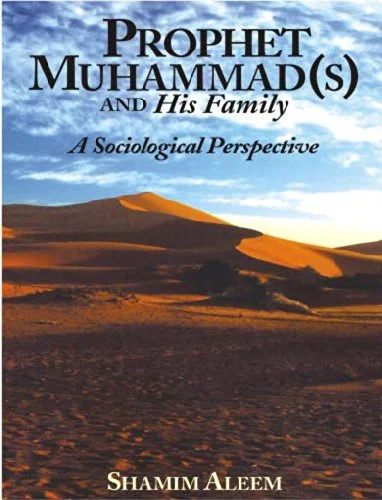
Family life in the earliest Muslim community is examined here through a sociological lens, with Shamim Aleem studying the household of Prophet Muhammad (PBUH) alongside the historical record. The approach stays analytical and respectful throughout.
The book considers social, ethical and cultural aspects of family relationships in early Islamic society, drawing on established historical sources and reading them with the tools of social science. Themes of leadership, compassion, justice and community formation are discussed in accessible language, so students and general readers can follow the analysis without specialist preparation. Academic credibility is maintained without dense terminology.
Where the value lies:
• Historical sources read through a sociological framework
• Attention to family structure and social relations in early Islam
• Discussion of leadership, justice and community building
• Language pitched for students as well as general readers
Suited to students of Islamic history, educators and readers exploring religious studies, available in English at Boipoka.
 নতুন-1% ছাড়