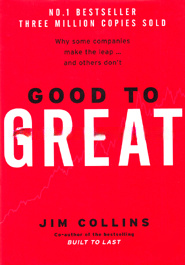
Why do some companies prosper in conditions that ruin their direct competitors? Jim Collins and Morten T. Hansen spent years comparing matched pairs of firms across turbulent decades to answer that, and the findings contradict a few comfortable assumptions.
The research identifies consistent behaviours among the outperformers, presented through ideas such as the twenty mile march, firing bullets before cannonballs, and disciplined recipes that change slowly. Luck is examined as a variable too, with attention to what organisations do with it rather than how much of it they receive. The method is laid out so readers can judge the evidence.
What it argues:
• Comparative research across companies in volatile industries
• Named frameworks for discipline, experimentation and consistency
• Treats luck as a factor to be managed rather than counted on
• From the authors of Good to Great, published by Random House
Written for executives, entrepreneurs and management students, available through Boipoka.