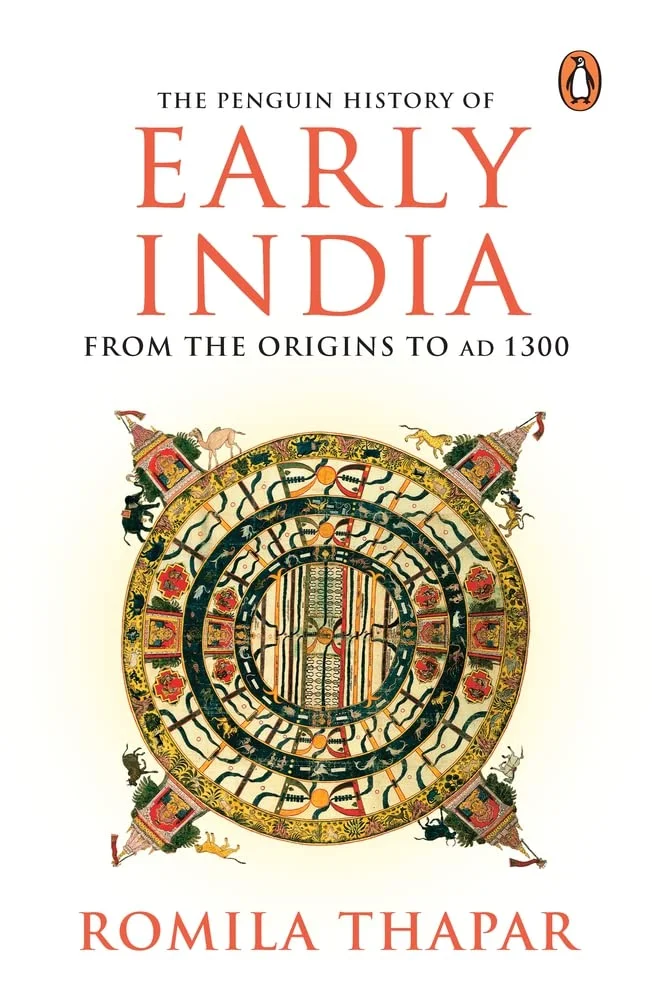
Romila Thapar's survey of the subcontinent runs from its earliest settlements to AD 1300, treating early India as a set of connected societies rather than a sequence of reigns.
The narrative moves through the Indus cities, Vedic society, the rise of Buddhism and Jainism, the major dynasties, and the trade networks and regional cultures that grew alongside them. Thapar works from archaeology, inscriptions and texts, and she is explicit about how interpretations have shifted over time, so the evidence and the argument built on it stay visible together. The writing keeps its academic weight while remaining readable for anyone approaching the period seriously for the first time.
Who it suits and why:
• Coverage from prehistoric settlement through to the thirteenth century in one volume
• Social, religious, economic and cultural history given equal weight with politics
• Attention to sources and to the debates historians have had over them
• A standard reference on university reading lists across South Asian history
Recommended for undergraduates, researchers and general readers of history, available from Boipoka.
 নতুন-1% ছাড়