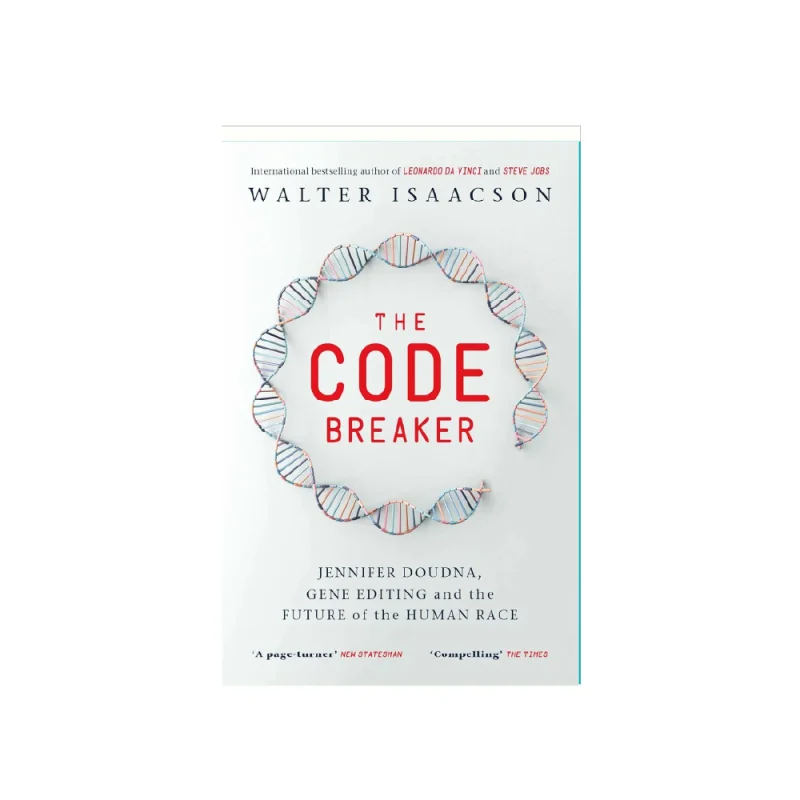
In sixth grade, Jennifer Doudna found a paperback copy of The Double Helix waiting on her bed, left there by her father, and the contest to read the code of life took hold of her.
Walter Isaacson follows her from a childhood in which a school counsellor said girls did not become scientists to the laboratory work behind CRISPR, the gene-editing tool she developed with her collaborators. The narrative covers rivalry between laboratories, the shift from a digital era to a life-science one, and the vaccine race that followed the coronavirus outbreak. Alongside the science, the book stays with the moral questions that editing human inheritance forces open.
Points of interest:
• A working account of how CRISPR moved from curiosity to usable tool
• The rivalries and collaborations that shaped the discovery
• Discussion of the ethical limits of editing human inheritance
• Context connecting coronavirus vaccines to the same technology
Suited to readers of popular science, students of biotechnology and anyone following the ethics of genetic research. Available from Boipoka.
 নতুন-1% ছাড়