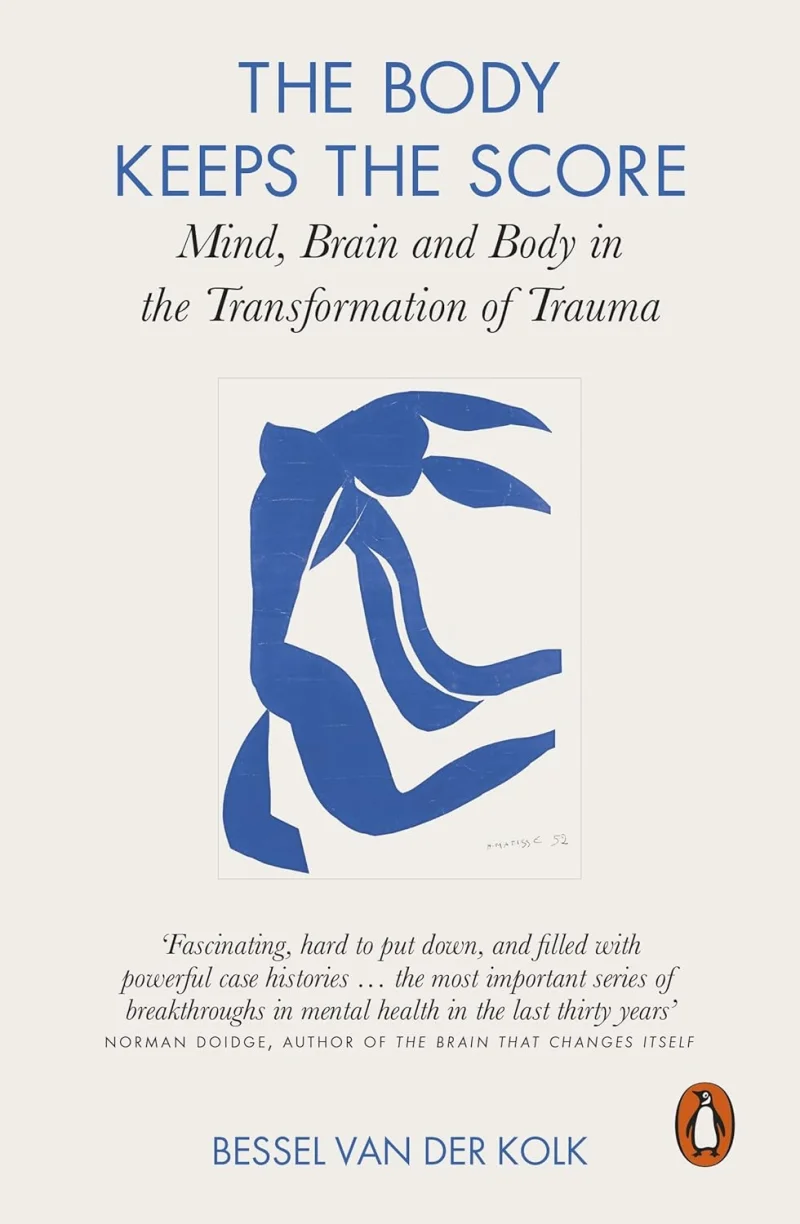
Trauma leaves marks on the body as well as the memory, and that claim organises this account of how recovery actually proceeds.
Bessel van der Kolk draws on neuroscience research and decades of clinical practice to explain why distressing experiences keep shaping mood, relationships and physical health long afterwards. Alongside conventional talking therapy he surveys approaches working through movement, breath, rhythm and attention, with case material used to show how treatment unfolds over time.
Inside this volume:
• Research on how the brain and nervous system register trauma
• A survey of therapeutic approaches that go beyond conversation
• Clinical examples illustrating the ordinary course of recovery
• Explanations pitched for general readers as well as clinicians
Useful to psychology students, counsellors, teachers and carers; it aids understanding rather than replacing care from a qualified mental health professional, and it is stocked by Boipoka.
 নতুন-1% ছাড়