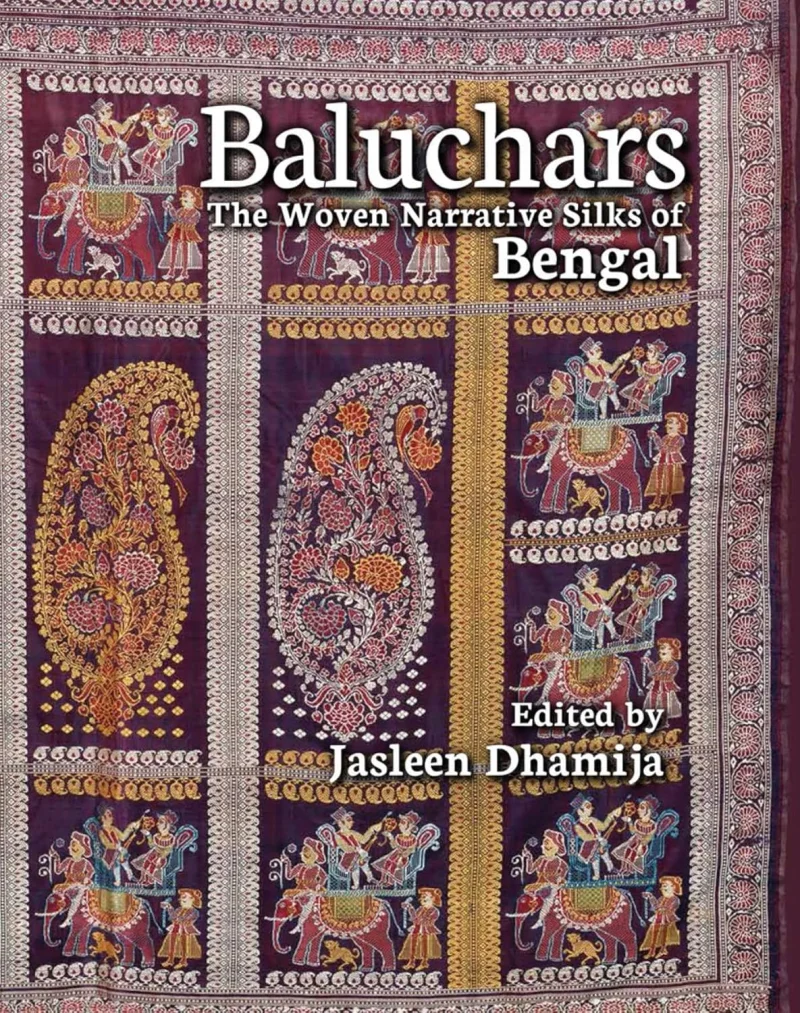
The Baluchar sari carries narrative scenes woven into its borders and end panels, and Jasleen Dhamija traces how that practice developed and survived.
Drawing on long research into South Asian textiles, Dhamija sets out the origins of Baluchar weaving, the communities who held the technique, the motifs that made these saris recognisable, and the social conditions that shaped demand for them. The account moves between craft detail and cultural history, treating the cloth as both a technical achievement and a record of the world its weavers lived in.
Key aspects of this volume:
• Traces the origins and later fortunes of Baluchar weaving
• Attention to the weaving communities who maintained the craft
• Discussion of narrative motifs and how they were read
• Places the textile within wider South Asian cultural history
Written for textile students, craft historians, collectors and readers interested in the material culture of the region. Carried at Boipoka.
 নতুন-0% ছাড়